GHK-Cu is the copper(II) complex of the tripeptide glycyl-L-histidyl-L-lysine (GHK), first reported in human plasma in 1973.
GHK binds copper(II) strongly; spectroscopic work indicated copper held by three nitrogen atoms and one oxygen atom in a square-planar arrangement.
PubChem records both 1:1 and 2:1 peptide-to-copper forms with different formulas and masses, so the stated form changes any molar calculation.
"Copper peptide" is a loose label: AHK-Cu is a different complex, and research on one should not be attributed to the other.
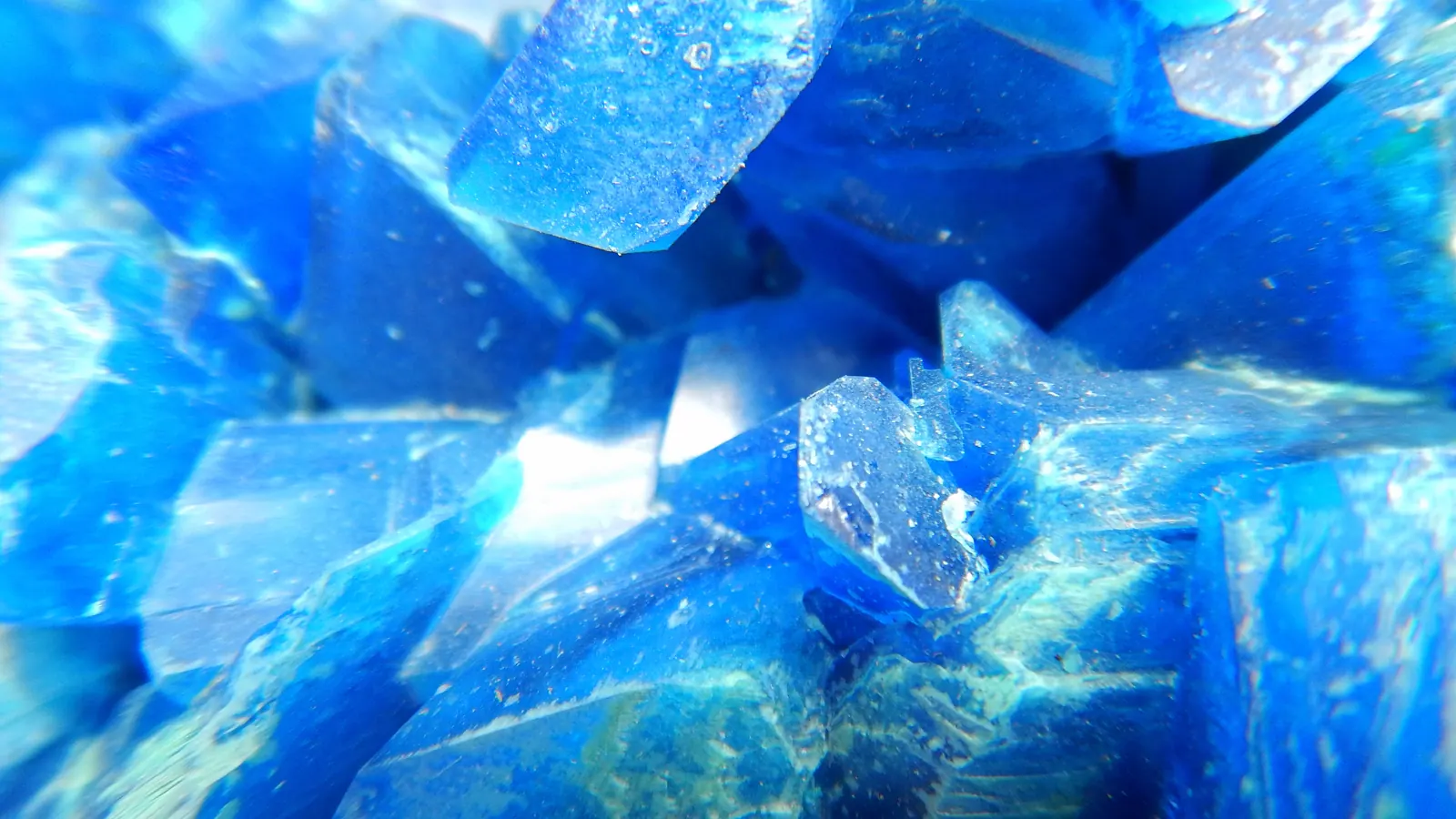
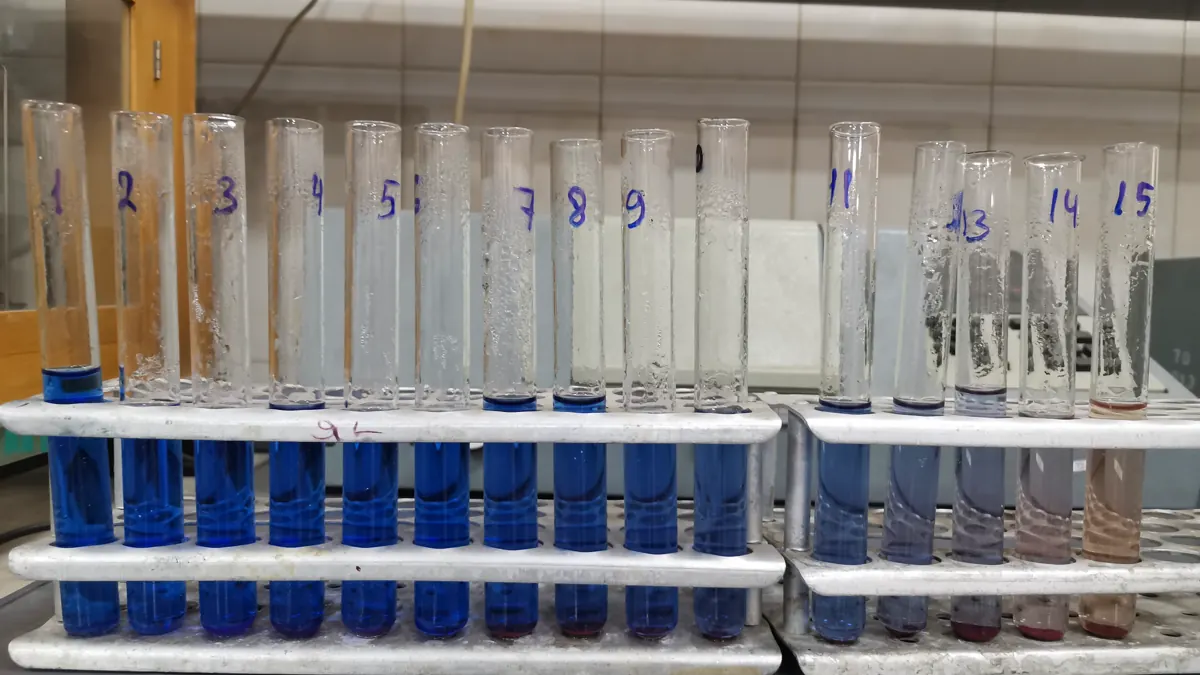
GHK-Cu is the copper(II) complex of GHK (glycyl-L-histidyl-L-lysine), a tripeptide first reported in human plasma in 1973 that binds copper(II) strongly. It is also known as copper tripeptide-1 and, as a nonproprietary name, prezatide copper.3 Solutions of the complex are blue, the usual colour of copper(II) compounds of this type.
This profile describes the compound as a laboratory chemical: identity, structure, analytical checks, handling and regulation. Titan Peptides supplies it for laboratory and research use only; it is not for human consumption.
How GHK binds copper
Equilibrium studies published in 1981 showed that GHK can compete with albumin for copper(II) at pH 7.5, and electron paramagnetic resonance work in 1983 indicated that the copper is held by three nitrogen atoms and one oxygen atom in a square-planar arrangement.12 Both studies documented several copper–GHK species across the pH range they tested, which matters at the bench: buffer choice can change what is actually in solution.12
GHK-Cu at a glance
Property
Value
Class
Copper(II)–tripeptide complex
Sequence (one-letter)
GHK (Gly-His-Lys), complexed with Cu(II)
Molecular formula (PubChem)
C14H23CuN6O4+ for the 1:1 copper complex as recorded (prezatide copper); C14H24N6O4 for free GHK
Molar mass (PubChem)
402.92 g/mol (1:1 complex as recorded); 340.38 g/mol (free GHK)
CAS number
89030-95-5 (prezatide copper); 49557-75-7 (GHK)
PubChem CID
71587328 (prezatide copper); 73587 (GHK)
Other names
Copper tripeptide-1, prezatide copper, GHK copper
Origin
Identified in human plasma, 1973
PubChem holds several records for "GHK-Cu" that differ in charge and stoichiometry, including a 2:1 peptide-to-copper complex (C28H46CuN12O8, 742.3 g/mol). The formula and mass printed on a supplier's documentation therefore depend on which form, and which counter-ions, are being described, and are worth checking against the record they claim to match.3
Copper peptide, copper tripeptide-1 and AHK-Cu: sorting out the names
"Copper peptide" is a loose label. GHK-Cu usually appears in ingredient lists as copper tripeptide-1, and its nonproprietary drug name is prezatide copper.3 Other copper–peptide complexes exist and are not interchangeable: AHK-Cu, for example, is L-alanyl-L-histidyl-L-lysine bound to copper, a different complex with a different formula and mass. When a document or study refers only to a "copper peptide", the first question is which peptide it means.
GHK-Cu's copper centre adds considerations that plain peptides do not have. Its speciation depends on pH, so buffer choice can change what is actually in solution, and its blue colour should be considered when choosing absorbance-based or colorimetric assays.12 The stated form also matters when converting a weighed mass into a molar concentration. For example, 50 mg corresponds to about 124 µmol if the material is the 1:1 complex at the 402.92 g/mol PubChem records, but about 67 µmol of complex if it is the 2:1 form at 742.3 g/mol, a difference of almost a factor of two in any calculated concentration.3 Where documentation does not state the form, the mass alone cannot tell you which calculation is right.
Store the sealed vial dry, dark and frozen at −20 °C or colder, let it reach room temperature in a desiccator before opening, and keep solutions short-lived in single-use frozen aliquots. General guidance on storing lyophilised and reconstituted peptides applies.
GHK-Cu in Australia
The June 2026 Poisons Standard has no entry that names GHK-Cu. It does contain a Schedule 4 entry for "copper compounds for human use", with exceptions that include preparations containing 5% or less of copper compounds, and it notes that the labelling exemption for poisons sold solely for laboratory use does not extend to controls on supply.4 The TGA's 13 April 2026 safety advisory names GHK-Cu as an example of an unapproved peptide product and states that a "research use only" disclaimer does not make supply lawful.5 How these provisions apply is covered in our guide are research peptides legal in Australia?.
Frequently asked questions
What is GHK-Cu?
GHK-Cu is the copper(II) complex of the tripeptide glycyl-L-histidyl-L-lysine, known as GHK. The peptide was first reported in human plasma in 1973 and binds copper(II) strongly; spectroscopic work indicated the copper is held by three nitrogen atoms and one oxygen atom in a square-planar arrangement.
Is GHK-Cu the same as copper peptide?
GHK-Cu is the best-known copper peptide, but the term is loose. GHK-Cu usually appears as copper tripeptide-1 in ingredient lists, and its drug nonproprietary name is prezatide copper. Other complexes, such as AHK-Cu, are different compounds with different formulas and masses.
Why is GHK-Cu blue?
The colour comes from the copper(II) ion bound to the peptide. Copper(II) complexes with nitrogen and oxygen ligands typically appear blue. Studies of the complex documented several copper–GHK species across the pH range, so shade and intensity can vary with conditions.
What is the CAS number of GHK-Cu?
PubChem lists prezatide copper, the 1:1 copper complex also called copper tripeptide-1, under CAS 89030-95-5 and CID 71587328, with formula C14H23CuN6O4+ and molar mass 402.92 g/mol as recorded. Free GHK has CAS 49557-75-7 and CID 73587, formula C14H24N6O4 and molar mass 340.38 g/mol.
References
Lau SJ, Sarkar B. The interaction of copper(II) and glycyl-L-histidyl-L-lysine, a growth-modulating tripeptide from plasma. Biochem J. 1981;199(3):649-56. PubMed 7340824
Laussac JP, Haran R, Sarkar B. N.m.r. and e.p.r. investigation of the interaction of copper(II) and glycyl-L-histidyl-L-lysine, a growth-modulating tripeptide from plasma. Biochem J. 1983;209(2):533-9. PubMed 6303307
National Center for Biotechnology Information. PubChem Compound Summaries for CID 71587328 (prezatide copper / copper tripeptide-1), CID 73587 (glycyl-L-histidyl-L-lysine) and CID 9831891 (bisprezatide copper). Accessed September 2026. Source
Therapeutic Goods (Poisons Standard—June 2026) Instrument 2026 (F2026L00633), registered 28 May 2026, commenced 1 June 2026. Schedule 4 and Appendix D, clause 5. Federal Register of Legislation. Source
Therapeutic Goods Administration. Understanding your responsibilities when importing, compounding and supplying unapproved peptide products (safety advisory). Published 13 April 2026. Source
Research use only. This article summarises published scientific literature
for educational purposes. It is not medical advice and does not describe or endorse human
or veterinary use. Compounds supplied by Titan Peptides are for laboratory research only
and are not approved therapeutic goods in Australia.
A plain-English primer on research peptides: what a peptide is, how peptides are built one amino acid at a time on a resin bead, why they arrive as a freeze-dried powder, and what "research use only" does and does not mean.
A laboratory guide to storing lyophilised and reconstituted peptides: freezer temperatures, moisture, oxidation-prone residues, light, freeze–thaw cycles and adsorption to containers.
What the TGA, the June 2026 Poisons Standard, the Therapeutic Goods Act and customs law actually say about peptides, "research use only" labels, import controls and advertising in Australia.